

When you’re starting a business, every rupee of your office setup budget needs to work hard. You’re making decisions today for a team that might double in size next year or you might pivot entirely and need your space to flex with you.
That’s exactly why modular office workstations have become the standard choice for startups. Not because they’re a trend, but because they genuinely solve problems that traditional office furniture can’t.
What "modular" actually means in practice
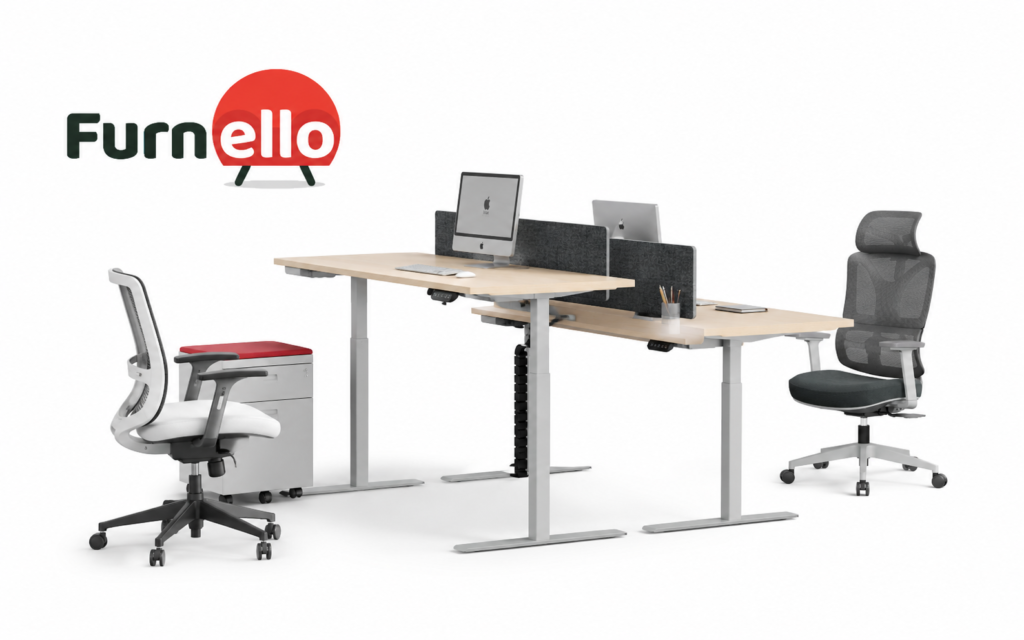
A modular workstation isn’t just a desk. It’s a system one that can be added to, rearranged, partitioned, and reconfigured without having to throw anything away or buy entirely new furniture. The components connect and disconnect by design.
For a startup, that’s enormously useful. The layout that works for a 12-person team probably won’t work for 30. Modular systems let you adapt without starting over.
Why startups in particular benefit from going modular
Growing teams don’t wait for furniture cycles. Hiring moves fast. Being able to add a workstation without redesigning the whole office is a practical advantage that saves time and money at a critical stage of growth.
Upfront costs are more manageable. You’re not committing to an expensive, fixed installation. You buy what you need now and expand when the time is right.
Also Read: How Ergonomic Office Furniture Improves Employee Productivity and Health
Space in Indian cities is expensive. Whether you’re in Hyderabad, Bangalore, or Mumbai, office real estate is costly. Modular workstations are designed to make the most of the space available something rigid traditional layouts often fail to do.
Collaboration happens differently in startups. Early-stage teams often need to move quickly shifting between focused work and group discussions without the friction of booking separate spaces. Open and cluster workstation layouts support that way of working naturally.
The different layouts and when to use them
Open workstations are the most common choice for collaborative teams. No barriers between desks, easy communication, and a feel that’s well-suited to creative and product-focused teams.
Cubicle workstations add partial partitioning. Good for teams that need more focus finance, legal, data where interruptions are costly.
Linear workstations line desks up in a row. Simple, space-efficient, and practical for smaller offices where every square foot matters.
Cluster workstations group desks into pods, typically of four to six people. Great for team-based working where people within a group collaborate frequently but you still want some separation between teams.
What to look for when choosing a modular system
The basics matter: look for durable materials, smooth cable management built into the desk structure, and the option to add partition panels if your team’s needs change. Beyond that, think carefully about the manufacturer’s ability to match your specific office dimensions a modular system that doesn’t quite fit your space isn’t truly modular.
The mistakes worth avoiding are straightforward but common. Don’t optimise only for today’s team size leave room to grow. Don’t underestimate how much poor cable management affects both productivity and how the space looks. And don’t treat ergonomics as secondary uncomfortable seating and poorly positioned screens cost you in ways that don’t show up on a furniture invoice.
FAQ
What does a modular workstation setup cost in India?
How long does installation take?
Can the layout be changed later?
Which layout works best for most startups?
Conclusion:
For a startup, the office setup you choose sends a signal to your team about how seriously you take their working environment. Modular workstations let you invest in something solid and functional without overcommitting at a stage when flexibility matters most.